
The Air Flow Estimation calculator answers one question in several ways: how much air does the engine move? Air is the budget everything else is spent against — fuel, boost and power all follow from it. Open it from Calculators › Air Flow Estimation. A single density setting sits at the top, then five independent sections each tackle the question from a different angle. The result of the first section can be sent to the Cam & Valvetrain calculator.

Mass and volume airflow are two views of the same thing, and the bridge between them is air density ρ. The default is 1.225 kg/m³ (cool air at 15 °C and sea level); for warm under-bonnet air use about 1.10 kg/m³ (around +35 °C). The valid range is 0.5–2.0 kg/m³. Every conversion between a volume figure (cfm) and a mass figure (g/s, kg/h) uses this number, so set it before reading mass results.
This section is a converter for a figure you already have — a MAF reading from a log, say. Enter the value and choose its unit (mg/stroke, g/s, kg/h or cfm), plus RPM and the cylinder count, and it shows the same flow in every other unit along with an approximate hp and kW. Use it to turn a logged air figure into the units you need, or to sanity-check the power it implies. Send → Cam hands the cfm straight to the Cam calculator.
This is the headline estimate: how much air the engine could move from its size and how it breathes. Enter Displacement (in cc, not litres — a 2.0 L engine is 2000 cc), VE (volumetric efficiency), PR (pressure ratio — 1.0 for naturally aspirated, higher with boost), RPM and the cylinder count. The result can be shown in any unit, and a Plot… button charts how it climbs with linear VE and PR ramps. The formula is the classic four-stroke one:
cfm = (cid × RPM ÷ 3456) × VE × PR
In words: a cylinder fills once every two crank revolutions, so the swept volume per minute (cid × RPM, with the 3456 constant turning cubic inches and revolutions into cubic feet per minute at 100 %) is scaled by how completely each cylinder actually fills (VE) and by any extra air that boost packs in (PR).
The same idea run backwards: start from a Target hp and work out the airflow it needs, given VE and a density ratio (DR). As a rule of thumb each horsepower needs roughly 1.5 cfm of air, which this section adjusts for how the engine breathes and how dense the charge is. Use it to answer “I want 400 hp — how much air must I move?” before choosing a turbo or heads.
If you know both the measured cfm (what the engine really flows) and the potential cfm (section 2 at 100 %), this gives the VE between them, as a percentage and as a ratio you can copy. VE is simply how full each cylinder gets compared with a perfect fill:
VE = measured cfm ÷ potential cfm
Boost raises pressure but also heat, and heat thins the charge back out — the density ratio captures the net effect. Enter the pressure ratio (PR) and the inlet and charge temperatures (Tin and Tout, in °C):
DR = PR × ((Tin + 273.15) ÷ (Tout + 273.15))
Lower Tout means a denser charge and more power, which is why intercooling pays off; when there is no temperature rise, Tout equals Tin and DR is just the pressure ratio. The DR you get here is the number to feed into Power to Airflow above.
Tip — the sections chain together: work out a density ratio in section 5, use it in Power to Airflow to find the air a power target needs, then size a turbo for that flow in the Turbo calculator.
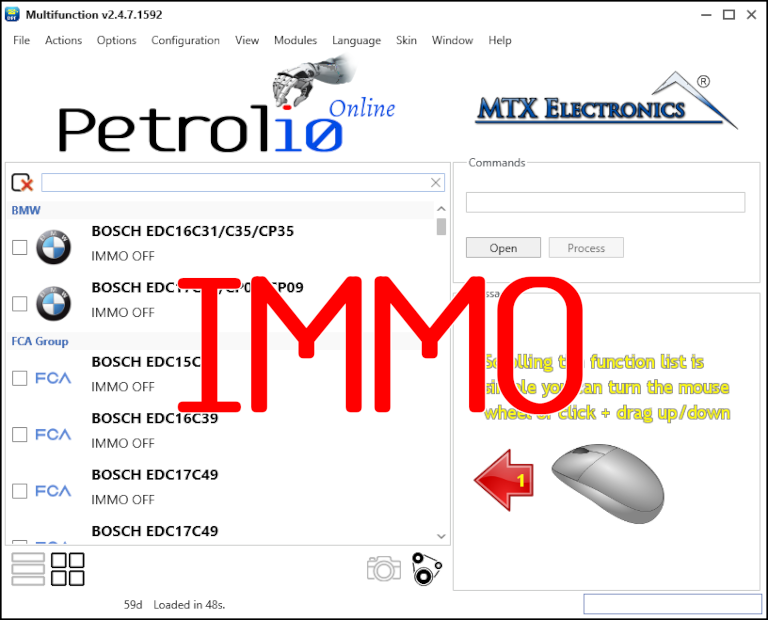
Immobilizer deactivation software for automotive professionals. Disable factory immobilizers directly in the ECU file ideal for engine swaps, track vehicles, and module replacements.
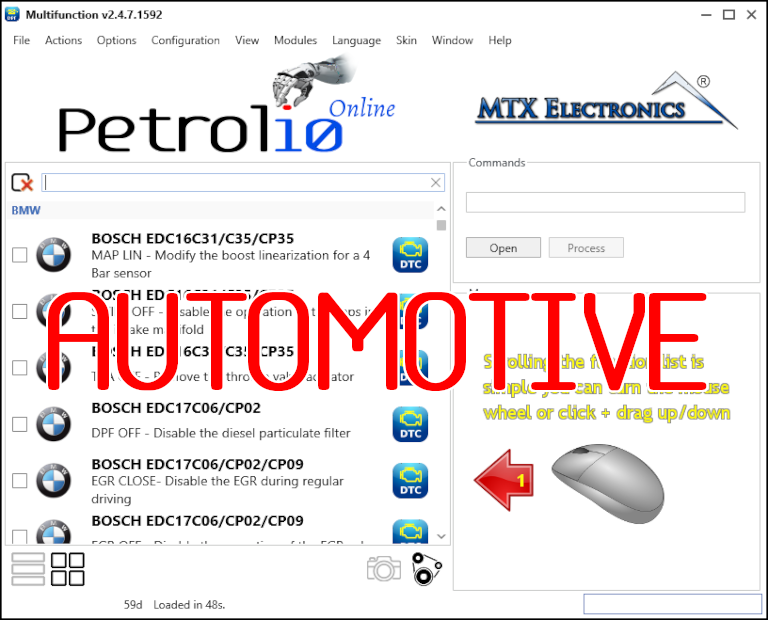
All-in-one application for tuning experts preparing vehicles for track use. Designed for professional workshops, it simplifies the deactivation of non essential components to unlock true performance.
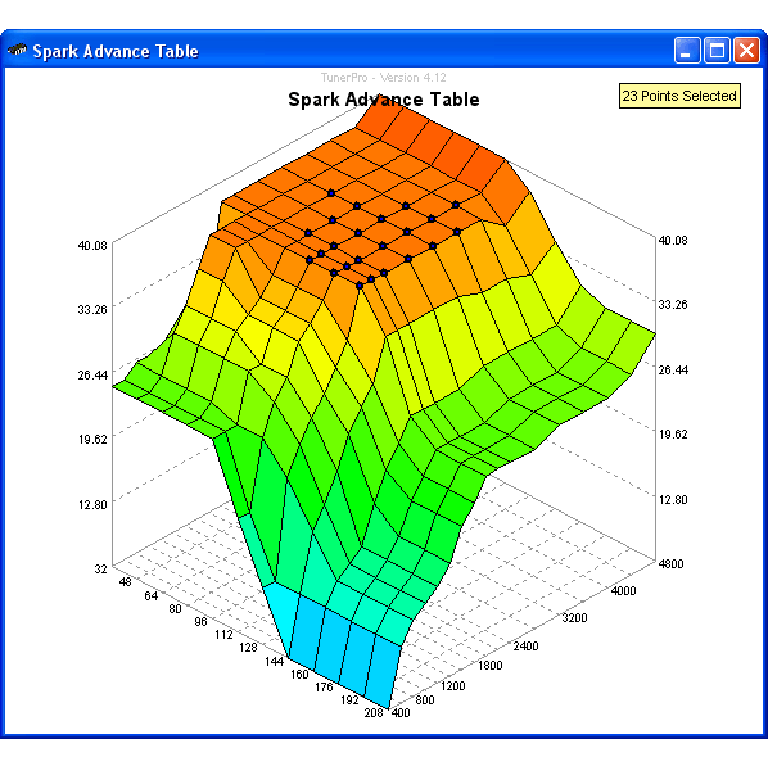
A free collection of checksum correction plugins for TunerPro that ensures safe ECU tuning. Automatically verify and update file checksums for reliable vehicle performance.