
This page is for developers. A checksum/detection plugin lets Tuning Editor verify and correct integrity checksums on an ECU the built-in coverage does not include. If you only want to configure checksum handling, see the Generic Checksum plugin instead — that plugin is also the canonical worked example for this guide.
A plugin is a single native shared library (.dll on Windows, .so / .dylib elsewhere) that the host loads from its plugins/ folder. The entire contract is a C ABI in one header, te_plugin.h: you include it and export a handful of extern "C" functions. There is no Qt or C++ ABI coupling, so any compiler and toolchain works.
Six functions are mandatory, one is optional:
te_plugin_abi_version — return the ABI major you built against; the host refuses to load on a major mismatch.te_plugin_describe — return a static descriptor: id, name, vendor, version, capability bits, optional family tags.te_analyze — read sections, return the detected identity, the checksums found and their valid/invalid status.te_free_analysis — free what te_analyze returned.te_correct — recompute/repair checksums into a mutable copy and return a correction report.te_free_correction — free what te_correct returned.te_plugin_configure (optional) — draw your own native settings dialog; advertise it with the configure capability bit.Use the calling-convention and visibility macros from the header, and build with hidden visibility so only these symbols are exported.
Note — the host owns every input; the plugin allocates every result and frees it in the matching te_free_*, with the same allocator. Do not free inputs or keep pointers to them after a call returns. Getting this wrong is the most common plugin bug.
te_analyze is read-only: sections arrive with a read-only working buffer and an optional reference version. te_correct receives a host-owned mutable copy — write corrected bytes directly into it, do not reallocate it. The host does verify-then-commit (it re-runs analysis on your output before keeping it), so honour the dry-run flag when set. A selection names which checksum ids to correct (empty means “all you support”); keep your enumeration order stable between analyze and correct so the ids line up.
te_analyze reports an ECU identity (any field may be null) and an advisory originality verdict — original, modified, or unknown. It is a verification aid only; it never forges or hides anything. A purely user-configured plugin typically reports unknown.
If you export te_plugin_configure and set the configure capability, the host shows a Configure… button and hands you the host window handle and a per-user config directory. Draw your own native, modal UI — do not start a second Qt instance. Return changed / unchanged / error so the host knows whether to re-analyse affected files. Because analyze and correct are not given the directory, derive your config location deterministically.
Build with CMake; the build pulls te_plugin.h from the host tree (override the path with -DTUNINGEDITOR_DIR=). Drop the built library into the host's plugins/ folder and use Help › Installed Plugins › Rescan. You do not need the GUI to test: load the library and drive the C ABI directly with synthetic sections, and run it under a leak detector to catch ownership mistakes early.
Tip — start from the example's skeleton/ (the smallest plugin that loads) and grow it. The full contract and a complete worked plugin are in the open-source repository.
The example source is published on GitHub at github.com/mtx-electronics under a permissive licence (0BSD) — use it as the starting point for your own plugin without attribution. See its PLUGIN_DEVELOPMENT.md for the complete ABI reference.
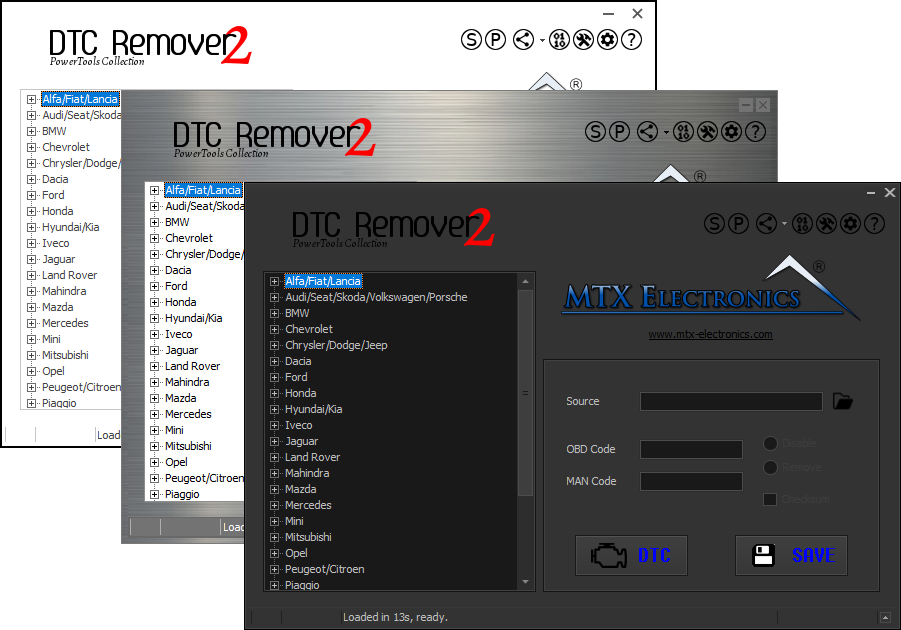
Lets you quickly disable fault codes to turn off the MIL light directly from your ECU file. Available in Standard and PowerTools editions with advanced scripting and online presets to remove faults by component groups.
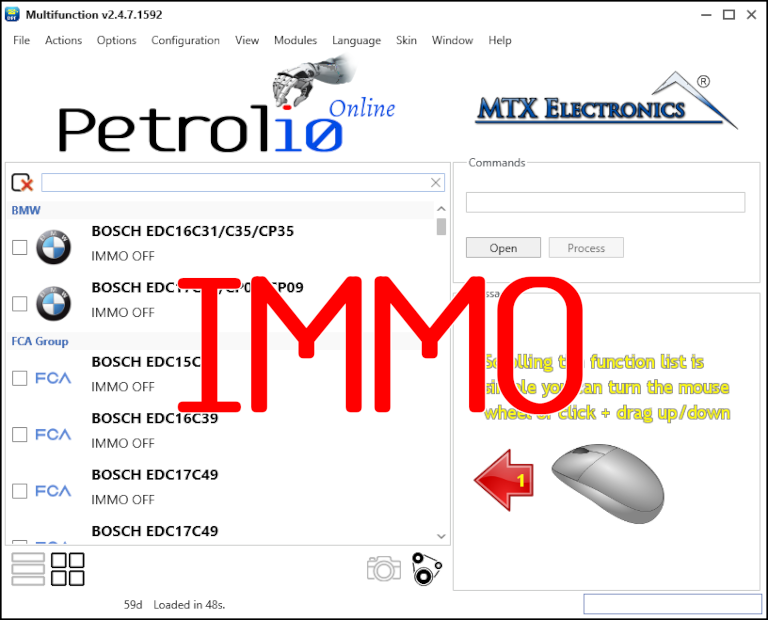
Immobilizer deactivation software for automotive professionals. Disable factory immobilizers directly in the ECU file ideal for engine swaps, track vehicles, and module replacements.
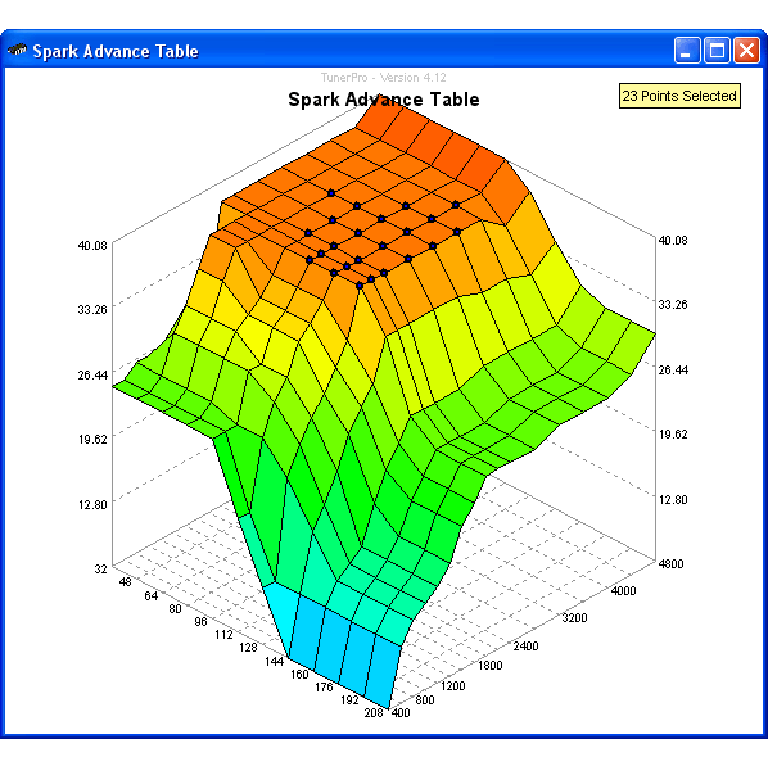
A free collection of checksum correction plugins for TunerPro that ensures safe ECU tuning. Automatically verify and update file checksums for reliable vehicle performance.