
Logo

Select a Section

How to download the software from the website
To download the software, log in to the website with your credentials via the Login link in the top-right corner, then open the License Manager from the same menu to download the full version of your purchased software.
How to install the software on the computer
A step-by-step guide to installing DTC Remover: language, licence agreement, component selection, desktop shortcuts, and the first-time USB driver installation for the protection dongle. A restart is advised before launching.
Overview of the software interface
A quick tour of the DTC Remover main window: choosing the ECU, opening a BIN file, entering OBD/MAN fault codes, the Disable/Remove modes, Checksum, DTC OFF and Save, plus the toolbar tools and the status bar.
Removing fault codes from a file
The step-by-step workflow for clearing fault codes: open a file, enter the OBD/MAN codes, choose Disable or Remove, press DTC OFF, and save — plus how to read the Results window.
Scanning a file for fault codes
Scan reads the loaded file and lists the fault codes it already contains; untick the ones to eliminate and press Clear (Unflagged), or Export the scan to a text file for later comparison in Tools.
Using presets
Presets are predefined lists of fault codes the software removes in one operation. Use Offline presets (stored locally) or Online presets (the shared library): tick what you need, press PLAY FLAGGED, then SAVE.
Tools: viewing and comparing scans
The Tools window has three options: look up a fault-code description, look up a Renault DF code to find its OBD equivalent, and view/compare exported scans. This page also covers Upload and sharing a file with DPF Remover.
Language and settings
Open Settings to change the program language and adjust how DTC Remover works: the default Disable/Remove mode, smart code input, ECU identification, appending applied codes to the saved file name, the results dialog and the file-dialog options.
Help, support and software information
The About window, the online help desk, the Report to support form, licence reactivation from the status bar, and the log window — everything for information, the licence and support.
Script Editor (advanced)
An advanced tool for automating DTC Remover with Basic, C++ or Pascal scripts: a toolbar (new, open, save, run, debug-run, stop), a GENERIC and DTC-Functions reference tree, and an information area for compile and run status. Most jobs do not need it.
Hex editor (preview)
The hex editor opens the raw bytes of the loaded file for inspection and careful editing, with Goto and Find (text or hexadecimal). It is an early (Alpha) preview, so edit with care and always keep a backup.
Frequently asked questions
Short answers to common questions: OBD vs manufacturer (PROD) codes, which field to use, what Disable/Remove/Checksum do, and how to format fault codes on BMW and the VAG group.
ECU-specific notes
What the Disable and Remove options actually do on Magneti Marelli MPC5xx, Bosch EDC15 and Siemens MPC5xx ECUs, including the differences between OBD partial and BDM full reads.
Troubleshooting
Fixes for the most common problems: the "DTC structure not found" message, faults not cleared, codes not found, files rejected for size, wrong window size and an unrecognised USB dongle.
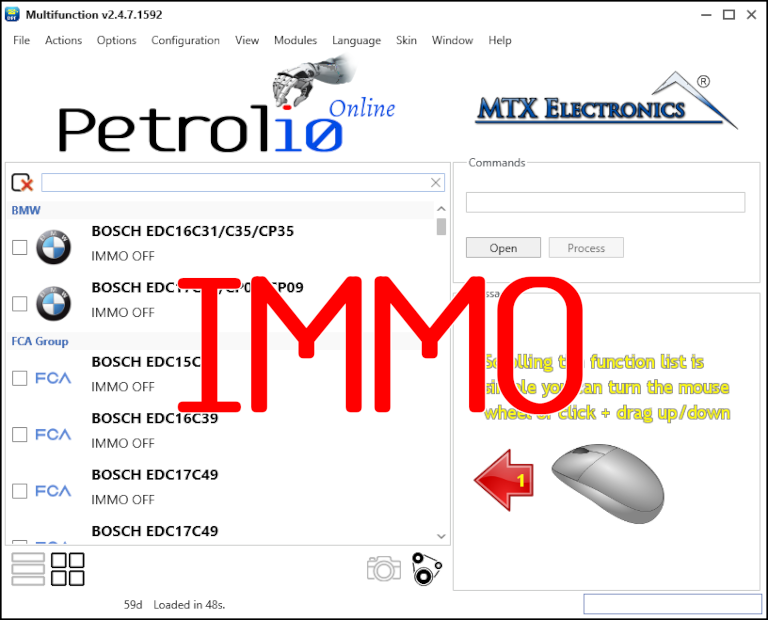
Petrol10 - Immobilizer

Petrol10 - Immobilizer

Immobilizer deactivation software for automotive professionals. Disable factory immobilizers directly in the ECU file ideal for engine swaps, track vehicles, and module replacements.
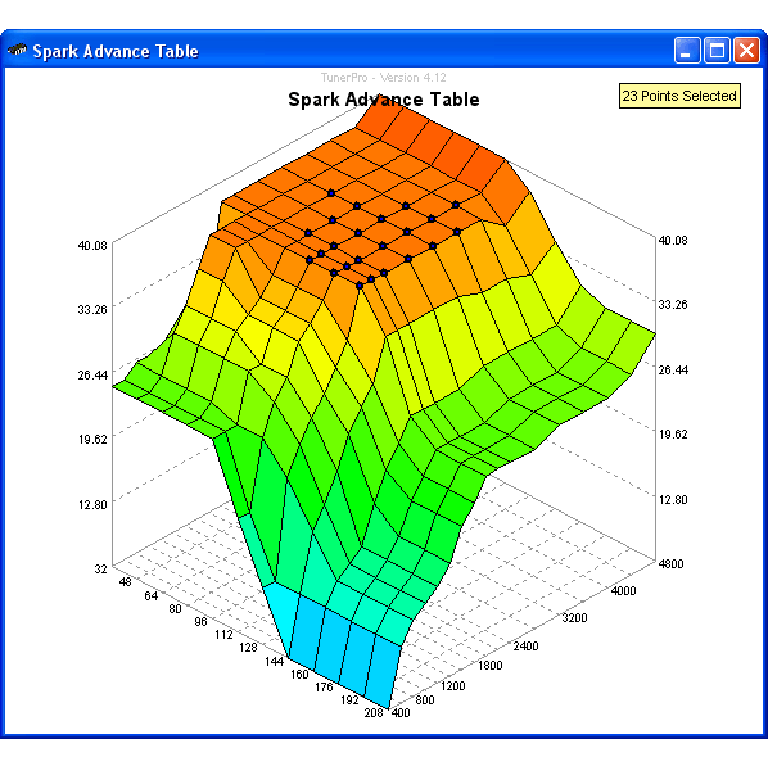
TunerPro Checksum Plugin Pack

TunerPro Checksum Plugin Pack

A free collection of checksum correction plugins for TunerPro that ensures safe ECU tuning. Automatically verify and update file checksums for reliable vehicle performance.
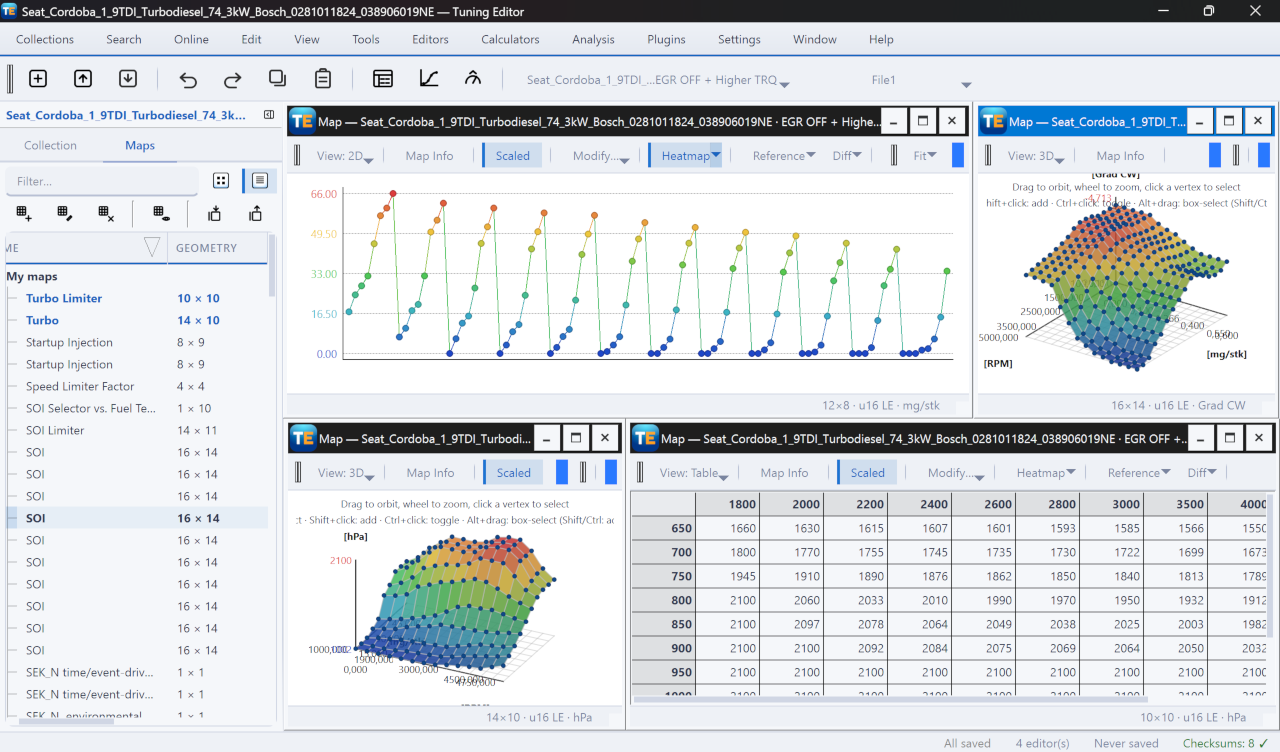
DTC Remover - Clear Fault Codes with Precision

DTC Remover - Clear Fault Codes with Precision

Lets you quickly disable fault codes to turn off the MIL light directly from your ECU file. Available in Standard and PowerTools editions with advanced scripting and online presets to remove faults by component groups.