
Tuning Editor is a free application for Windows that lets you view and edit ECU calibration data — the tables and values stored inside an engine control unit's memory, commonly called a ROM or binary. It opens the files those ROMs are saved in, shows the calibration maps they contain in readable tables and graphs, and lets you change them safely and export the result.

Note — Tuning Editor works on calibration files. Reading the data out of a vehicle and writing it back is done with separate tools or hardware; Tuning Editor is where you understand and edit what those tools produce.
A few concepts appear throughout the rest of this documentation:
The documentation is organised by what you are trying to do:
Start with ECU tuning basics & glossary, which explains every term in plain language, then follow your first calibration: a guided walkthrough to do the whole process once from start to finish.
Warning — always keep an unmodified copy of the original ECU file. Tuning Editor's versioning makes this easy, but a stock backup is your safety net if anything goes wrong.
Tuning Editor runs on Windows 10 or later (64-bit) and is free to use under its licence. The installer is self-contained — see download and installation to get started.
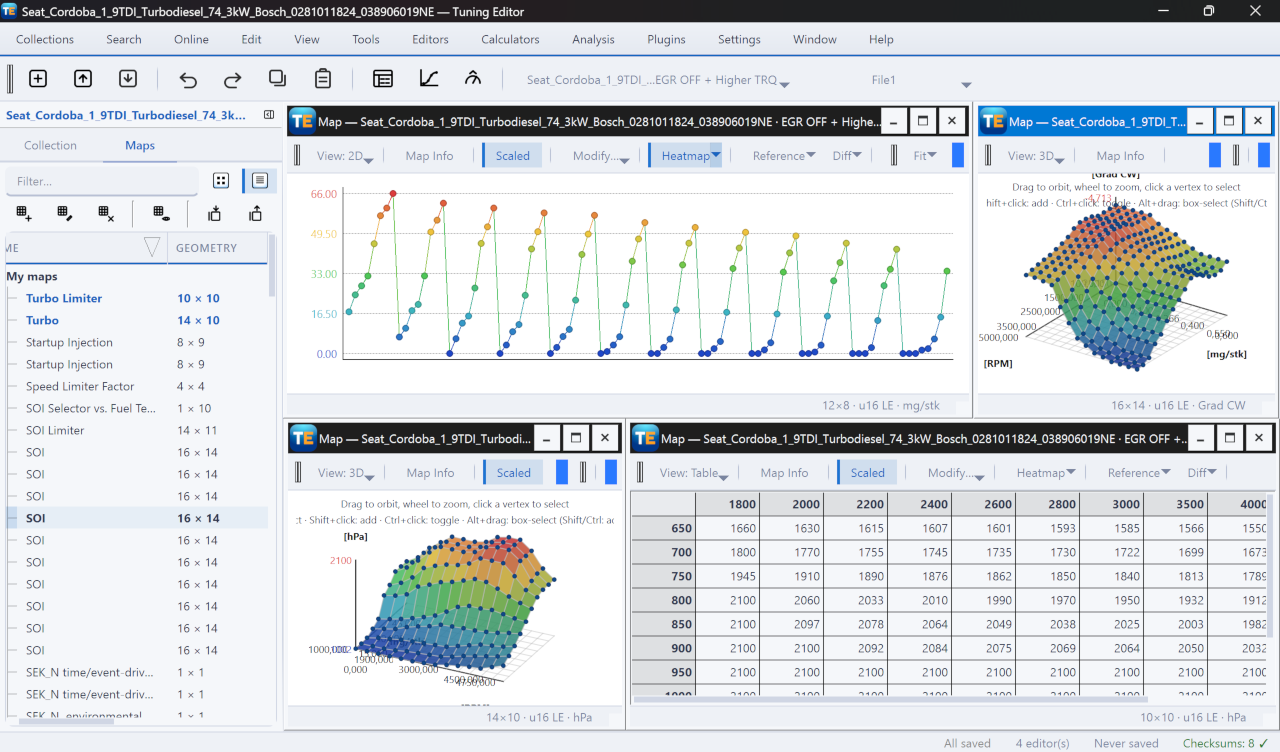
A free, modern Windows software for viewing and editing ECU calibration data - map and hex editors, tuning calculators, and online services.
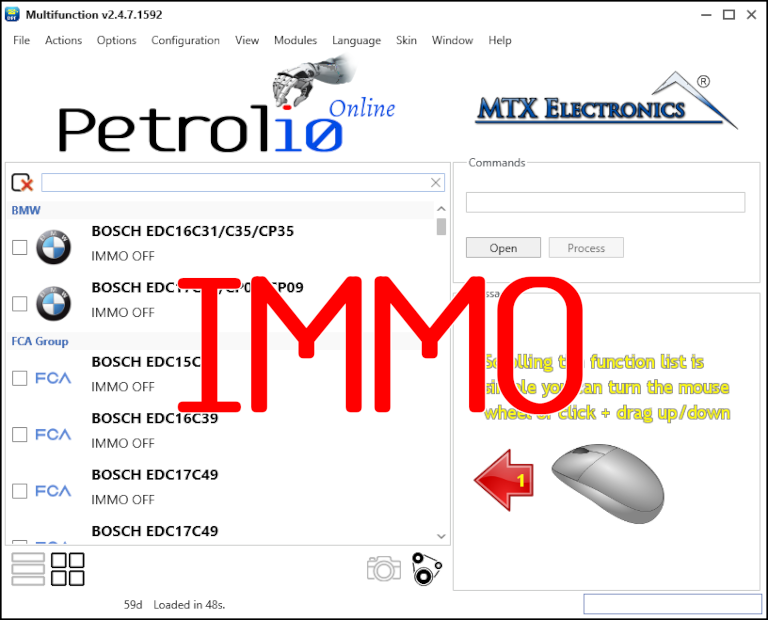
Immobilizer deactivation software for automotive professionals. Disable factory immobilizers directly in the ECU file ideal for engine swaps, track vehicles, and module replacements.
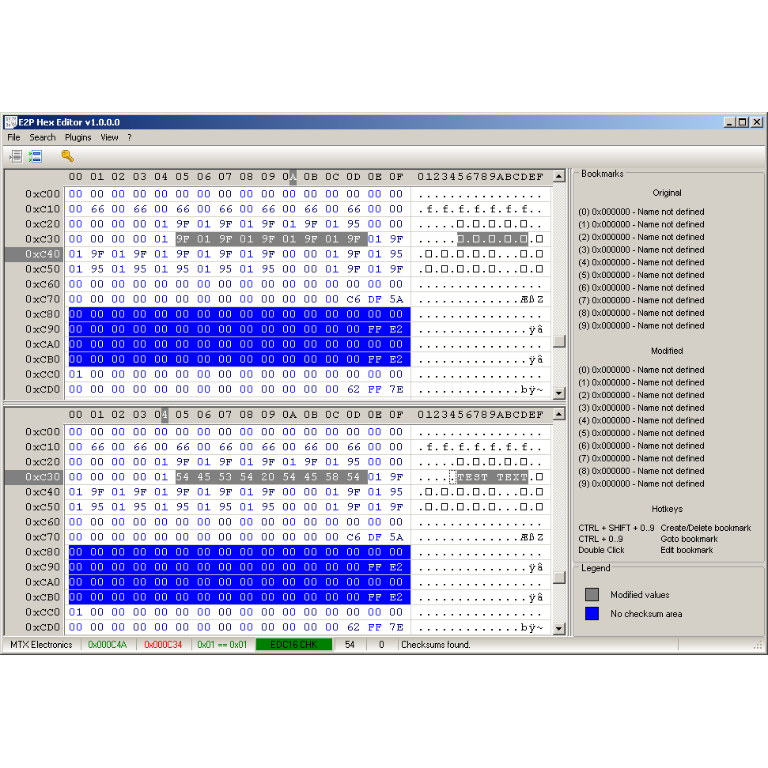
A hex editor built specifically for editing EEPROM data in automotive ECUs. With real-time checksum correction, side-by-side file comparison, and plugin support for automated tasks it's the ultimate tool for professionals.